Alien Encounters: What the Records Show—and Where They Stop
What can surviving federal records still certify about UFO reporting, and what can they no longer certify about mass-witness alien encounters?
This file stays inside what three US institutions publish as accessible records about UFO or UAP reporting and oversight.
- Project Blue Book identified as a US Air Force program, 1947–1969
- 12,618 sightings reported to Project Blue Book
- 701 remain labeled ‘Unidentified’ within Blue Book totals
- CIA FOIA Reading Room hosts a record labeled ‘FLYING SAUCERS UFO REPORTS’ with a fixed identifier
- Congress.gov hosts a House oversight text on UAP and includes a statement about limited reporting options for military witnesses
These points mark the stable edge of what this source packet can certify, without filling in missing case files.
The CIA FOIA Reading Room entry pinned to CIA-RDP81R00560R000100010002-9
A CIA FOIA Reading Room page functions as a public index entry for a single document.
The page presents the item under a fixed alphanumeric identifier. That identifier allows the record to be re-found without relying on retellings.
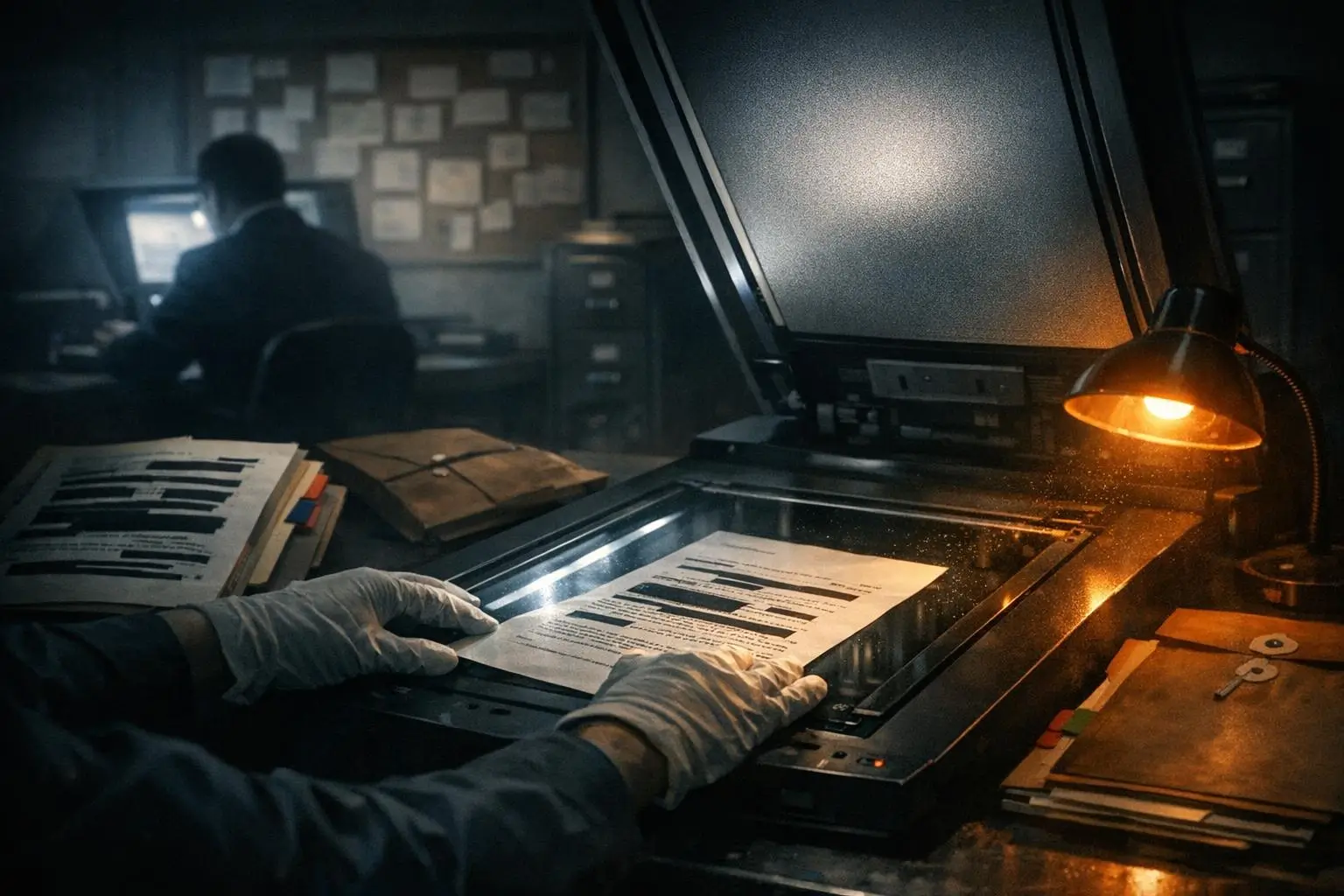
The entry is framed as a documentation object, not as a narrative of an event.
A header line on the page uses the terms flying saucers and UFO reports as the record label. The label itself does not certify what any report contained.
At this point, the administrative act that can be certified is simple: the CIA makes an item discoverable through its Reading Room, and the item has a stable reference code.[1]
This evidence gate certifies that a CIA-hosted, FOIA-accessible document exists and is traceable by identifier, but it does not certify any mass-witness encounter details. The next question is where event-level records appear, if they exist.
The National Archives Blue Book page that publishes scale, without event reconstruction
The U.S. National Archives identifies Project Blue Book as a U.S. Air Force program covering 1947 to 1969.
On the same research page, a total of 12,618 sightings are presented as reported to Project Blue Book, and 701 are presented as remaining ‘Unidentified’ within that total.
These published numbers certify volume and a category boundary. They do not certify how many witnesses stood behind any single report in this packet.
What remains unresolved is which specific Blue Book case files, if any, would document a multi-witness event in a way that can be audited from originals.[2]
The Congress.gov oversight text that places UAP in a formal hearing record
Congress.gov hosts official text for a House event titled ‘Unidentified Anomalous Phenomena: Implications on National Security, Public Safety, and Government Transparency’.
This record node certifies that UAP were addressed in a formal oversight setting with witness testimony. The event text is preserved as an official publication.
The text does not, by itself, stabilize the details of any named mass-witness incident. It does not supply a case packet for events often discussed as large-scale sightings.
The next unresolved question is how the oversight record describes the practical limits of reporting from the witness side.[3]
The one sentence that documents reporting friction, and what it does not say
Within the House event text, the record includes a constraint stated in plain language.
The sentence reads: ‘Right now, military witnesses to UAP have limited options for reporting UAP.’
This certifies that a reporting-channel limitation is asserted inside the oversight text. It does not enumerate what the options are, and it does not certify how often the limitation affected any specific report.
What remains open is whether other public records in this packet define those reporting paths in more detail, because this excerpt does not.[3]

A Smithsonian editorial that supports timeline vocabulary, not case proof
The Smithsonian National Air and Space Museum publishes an editorial page titled ‘1947: Year of the Flying Saucer’.
That page supports limited alignment around public-era terminology for flying saucers in 1947. It is not presented here as an operational record of any specific incident.
This means it can help anchor how the period is discussed, while leaving the certification of events to government archives and their preserved documents.
The unresolved question is still case-level: where are the contemporaneous documents for any single multi-witness encounter that the episode premise wants to examine.[4]
Where the mass-witness case file should be, and is not, in this packet
The episode premise points toward mass-contact cases with multiple witnesses, including names often used in public discussion such as the Phoenix Lights and the Ariel School incident.
This validated set does not include primary or official case materials for those named events. It does not include any Tier 1 or Tier 2 document that quantifies multiple witnesses for a single incident.
Because of that absence, this slice cannot certify what occurred, cannot certify how many witnesses were involved, and cannot certify what any agency concluded for those events.
What remains unresolved is practical and narrow: which contemporaneous local records, if located and verified, would allow a single mass-witness case to be reconstructed from originals rather than secondary summaries.
Alien encounters as a keyword, versus what these records actually categorize
The public keyword alien encounters implies an origin claim that this packet does not stabilize.
Here, the preserved categories are UFO, UAP, and ‘Unidentified’ inside Project Blue Book totals, plus a CIA Reading Room label about flying saucers and UFO reports.
Those terms certify that institutions tracked and discussed reports. They do not certify extraterrestrial origin, contact, or a close-encounter classification.
The next unresolved question is evidentiary: what document types would be required to move from an ‘Unidentified’ label to an origin claim, since that step is not supported here.[2]
What the archive can certify about mass witness contact, and why it stops
The opening question asked what the record can still certify, and what it can no longer certify, about mass-witness alien encounters.
This packet can certify that multiple US institutions preserve public-facing records about UFO or UAP reporting: a National Archives page with Blue Book scale figures, a CIA FOIA Reading Room document entry with a fixed identifier, and a Congress.gov oversight text with witness testimony framing.
Certification stops at the moment the narrative needs event-level files. There are no primary case packets here for named mass-witness events, and there is no validated document here that counts witnesses for any single incident.
The stopping point is therefore not a theory problem. It is a missing-record problem inside this specific source set.[2]
FAQs (Decoded)
Does Project Blue Book certify alien contact in its ‘Unidentified’ cases?
No. In this packet, ‘Unidentified’ is preserved as a category label within reported totals. It is not mapped to extraterrestrial origin. Source: U.S. National Archives, Project Blue Book research page.
Do these sources document any single mass-witness event like the Phoenix Lights or Ariel School incident?
No. This packet explicitly lacks primary or official case materials for those named events. It cannot certify event details or witness counts from originals. Source: U.S. National Archives, Project Blue Book research page.
What does the CIA FOIA Reading Room item prove on its own?
It certifies that a CIA-hosted, FOIA-accessible document entry exists with a stable identifier and label. It does not certify the contents as a specific mass-witness encounter record here. Source: CIA, FOIA Reading Room document page.
What is the documented reporting constraint for military witnesses in the House event text?
The text includes the statement that military witnesses to UAP have limited options for reporting UAP. It does not detail those options in the excerpt used here. Source: Congress.gov, House event text.
Why include the Smithsonian page at all if it is not a case record?
It supports limited timeline vocabulary around 1947 flying saucer era context, while leaving evidentiary certification of cases to primary archival records. Source: Smithsonian National Air and Space Museum, ‘1947: Year of the Flying Saucer’ editorial page.
For additional routing through the paranormal records archive, see the indexed uap reporting records corridor, the ufo sightings case index, and cross-referenced roswell incident records.
Sources Consulted
- CIA, FOIA Reading Room document page. cia.gov, accessed 2025-02-17
- U.S. National Archives, Project Blue Book research page. archives.gov, accessed 2025-02-10
- Congress.gov, House event text. congress.gov, accessed 2025-02-03
- Smithsonian National Air and Space Museum, ‘1947: Year of the Flying Saucer’ editorial page. airandspace.si.edu, accessed 2025-01-27

A Living Archive
This project is never complete. History is a fluid signal, often distorted by those who record it. We are constantly updating these files as new information is declassified or discovered.