Alien Abduction Stories: What the Records Show—and Where They Stop
What can the surviving record still certify about alien abduction stories, and where does it stop before incident-level confirmation?
This archive slice holds a small set of institutional pages and PDFs that treat abduction accounts as narratives, claims, and study objects.
- Betty and Barney Hill positioned as widely remembered early abductees
- Harvard Gazette frames abduction claims as examined research subject
- BPS Research Digest links many beliefs to sleep paralysis and false memories
- PDF titled Abduction or sleep paralysis built around an explanatory comparison
- DIA FOIA PDF analyzes alleged unintended injury from anomalous advanced aerospace systems
These points define the stable edge of certification available here, and anything beyond them is not stabilized in this set.
A DIA FOIA reading-room PDF that stays inside injury analysis, not abduction case files
The Defense Intelligence Agency FOIA Electronic Reading Room hosts a PDF under a direct file identifier rather than a case narrative label.
The document title appears as Anomalous Acute and Subacute Field Effects on Human Biological Tissues, presented as a standalone downloadable file.
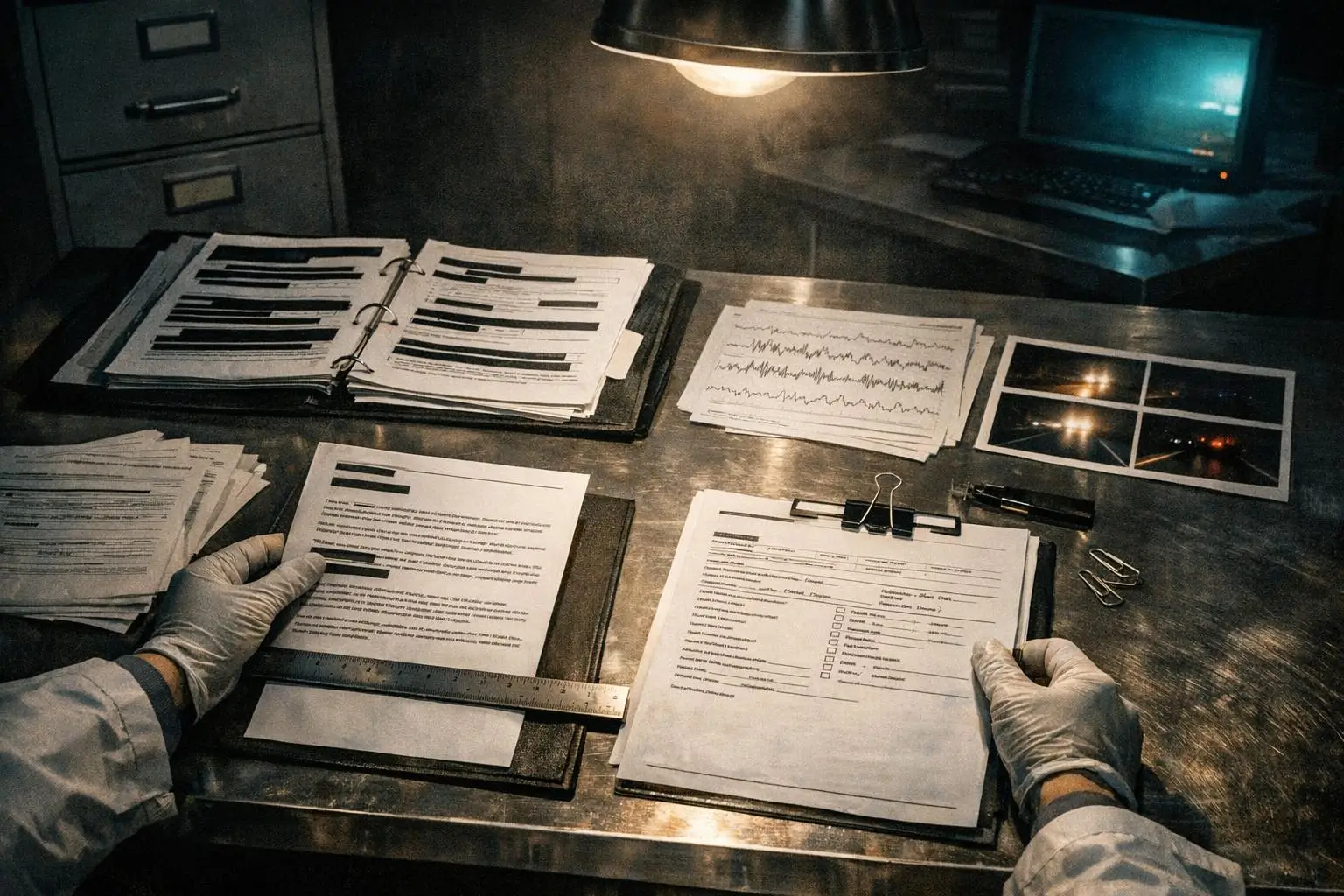
The preserved description states that the PDF ‘summarizes, and analyzes evidence of unintended injury to human observers by anomalous advanced aerospace systems’. The phrasing is administrative, scoped to injury and analysis.
Nothing in that scope line names alien abduction stories as the documentary object. The administrative frame concerns alleged effects on people, not reconstructing abduction incidents.
In this archive slice, the FOIA posting functions as an official-document trail node near the broader topic of anomalous phenomena, but it does not supply incident-level records for abduction claims.
This file can certify that an official reading room preserves analysis of alleged unintended injury tied to anomalous advanced aerospace systems. It cannot be used here as documentation of specific abduction accounts.[1]
Betty and Barney Hill as a library-positioned origin point, not a corroborated case file
The Boston Public Library hosts an overview titled The Abduction of Betty and Barney Hill.
Within the framing preserved in this set, the Hills are described as remembered as the first alien abductees. This positions their story as an early and widely remembered narrative.
This library placement can certify cultural prominence and accessibility. It does not supply Tier-1 incident documentation inside this archive slice.[2]
A Harvard Gazette record that treats abduction claims as examinable claims
The Harvard Gazette page in this set carries the headline Alien abduction claims examined.
That framing preserves an institutional posture: the subject is claims and their examination, not confirmation that abductions occurred.
The record here does not stabilize how the examinations map onto any specific, named abduction story. That incident-level layer is not present in the provided materials.[3]
A mechanism statement that explicitly narrows the explanatory lane
The British Psychological Society Research Digest preserves a direct mechanism claim about belief formation around abduction narratives.
It states: ‘We can probably conclude that these alien mis-adventures arise due to two entirely more mundane phenomena: sleep paralysis, and false memories.’
This statement can certify that sleep paralysis and false memories are explicitly offered as mundane pathways in at least one institutional research digest. It does not certify prevalence rates or universality in this archive slice.[4]

A named artifact that hardens the comparison: Abduction or sleep paralysis
This set includes a faculty-hosted PDF titled Abduction or sleep paralysis.
The documentary value here is the artifact itself and its organizing comparison between an abduction interpretation and a sleep-related account.
The archive slice does not provide the missing clinical rate layer needed to move from comparison to quantified typicality.[5]
A thesis purpose statement that frames the abduction experience as phenomenology in context
A university-repository thesis in this set describes its purpose in explicitly phenomenological and contextual terms.
It states its aim is ‘to explicate the phenomenological nature of the alien abduction experience… to place it in a cultural and historical context…’.
This can certify an academic framing of the abduction experience as a describable phenomenon in culture and history. It does not convert narratives into incident-level documentation inside this set.[6]
John E. Mack as a documented node, with biography boundaries intact
A PubMed Central profile in this set contains a summary identifier: a ‘Psychiatrist who studied claims of alien abduction…’.
That line can certify that the study of abduction claims is attached to a named professional figure in the biomedical-library record preserved here.
The same record does not certify outcomes for any specific abduction claim within this archive slice. It does not supply an incident file trail.[7]
An index record visible in the archive, without secured underlying text
This set includes a Semantic Scholar entry that functions as an index record for a work on UFO abduction reports.
Within the constraints of this archive slice, the underlying full text and publication venue are not confirmed from the index record alone.
The entry can be treated as a pointer. It cannot carry content-level findings or arguments here.[8]
Where this record stops, and why the abduction question remains structurally unanswered here
The opening question asked what the record can still certify, and where it stops before incident-level confirmation.
It can certify that abduction stories are culturally positioned through a library overview, and that institutional sources treat abduction claims as subjects for examination and explanation.
It can also certify a hard mechanism lane in one digest statement, and a formal comparison artifact titled Abduction or sleep paralysis.
Certification stops because this set does not include Tier-1 primary documentation for flagship cases. It does not include peer-reviewed prevalence or systematic review evidence on the proposed mechanisms among self-identified abductees.
It also stops at scope boundaries: the DIA FOIA PDF concerns alleged unintended injury tied to anomalous advanced aerospace systems, but it does not document specific abduction incidents in this slice.[4]
FAQs (Decoded)
Do these sources verify that alien abductions happened?
No in this archive slice the institutional pages treat abduction stories as claims, narratives, or study objects rather than confirmed events. Source: Harvard Gazette, Alien abduction claims examined.
Is the DIA FOIA PDF evidence for specific abduction stories?
No the preserved scope language is about alleged unintended injury linked to anomalous advanced aerospace systems and it does not document specific abduction incidents here. Source: Defense Intelligence Agency, FOIA Electronic Reading Room PDF on anomalous acute and subacute field effects.
Why are Betty and Barney Hill included if the record is not confirming incidents?
They appear because the library overview positions their story as widely remembered and early in abduction cultural memory, which is a different claim type than corroboration. Source: Boston Public Library, The Abduction of Betty and Barney Hill.
What mechanism explanation is explicitly stated in the provided materials?
The BPS Research Digest excerpt explicitly points to sleep paralysis and false memories as mundane phenomena linked to some abduction beliefs. Source: British Psychological Society, Research Digest page on what leads people to believe they have been abducted.
What does the PDF Abduction or sleep paralysis add to the archive slice?
It adds a concrete named artifact organized around an explanatory comparison, which constrains discussion to that documented framing rather than freeform medical claims. Source: Appalachian State University hosted PDF, Abduction or sleep paralysis.
Who is John E. Mack in this record?
He appears in a PubMed Central profile as a psychiatrist who studied claims of alien abduction, without this slice providing incident files or case outcomes. Source: National Library of Medicine PubMed Central, profile article on John E Mack.
For related paranormal case files, see the broader archive. Additional ufos and aliens records provide institutional context. The alien encounters case records continue this corridor.
Sources Consulted
- Defense Intelligence Agency, FOIA Electronic Reading Room PDF Anomalous Acute and Subacute Field Effects on Human Biological Tissues. dia.mil, accessed 2025-02-17
- Boston Public Library, blog overview page The Abduction of Betty and Barney Hill. bpl.org, accessed 2025-02-10
- Harvard Gazette, institutional article page Alien abduction claims examined. news.harvard.edu, accessed 2025-02-03
- British Psychological Society, Research Digest page What leads people to believe they have been abducted by aliens. bps.org.uk, accessed 2025-01-27
- Appalachian State University hosted PDF, Abduction or sleep paralysis. appstate.edu, accessed 2025-01-20
- Western Michigan University ScholarWorks, masters thesis PDF. scholarworks.wmich.edu, accessed 2025-01-13
- National Library of Medicine PubMed Central, profile article page John E Mack. pmc.ncbi.nlm.nih.gov, accessed 2025-01-06
- Semantic Scholar, index record page. semanticscholar.org, accessed 2024-12-30

A Living Archive
This project is never complete. History is a fluid signal, often distorted by those who record it. We are constantly updating these files as new information is declassified or discovered.