Ghosts & Demons: The Phenomena That Persist Between Psychology and Environment

Recurring apparitions, hostile presences, places that produce the same stories again and again. We track reports, recordings, environmental factors, and belief systems to see where perception ends—and where patterns refuse to disappear.

Scope of Inquiry

What This Sub-Archive Tracks

This sub-archive treats ghosts and demons as recurring experiential patterns. We examine apparitions, possessions, poltergeist activity, and hostile-presence reports alongside environmental variables (infrasound, EM fields), neurological effects, trauma, architecture, and belief frameworks. Many cases resolve through psychology or context. Others recur with such consistency—same locations, same behaviors, same narratives—that they remain unresolved without forcing a cheap conclusion.

Classification Categories

Hauntings

Locations tied to repeated sightings, sounds, or interactions—often consistent across witnesses and decades.

Possession & Control

Claims of external agency acting through a person—read alongside medical, cultural, and historical frameworks.

Environmental Triggers

Infrasound, EM fields, toxins, sleep disruption—factors known to generate fear, presence, and anomalous perception.

Reading Protocol

How to Read a Case

  • Audit the environment first: sound, light, air quality, sleep, and stress.
  • Separate cultural labels from raw experience—terms vary, sensations repeat.
  • Prefer recurrence over drama: the strongest cases repeat without media amplification.

These cases don’t persist because people want them to be true. They persist because certain experiences keep happening—under the same conditions.

Case Files

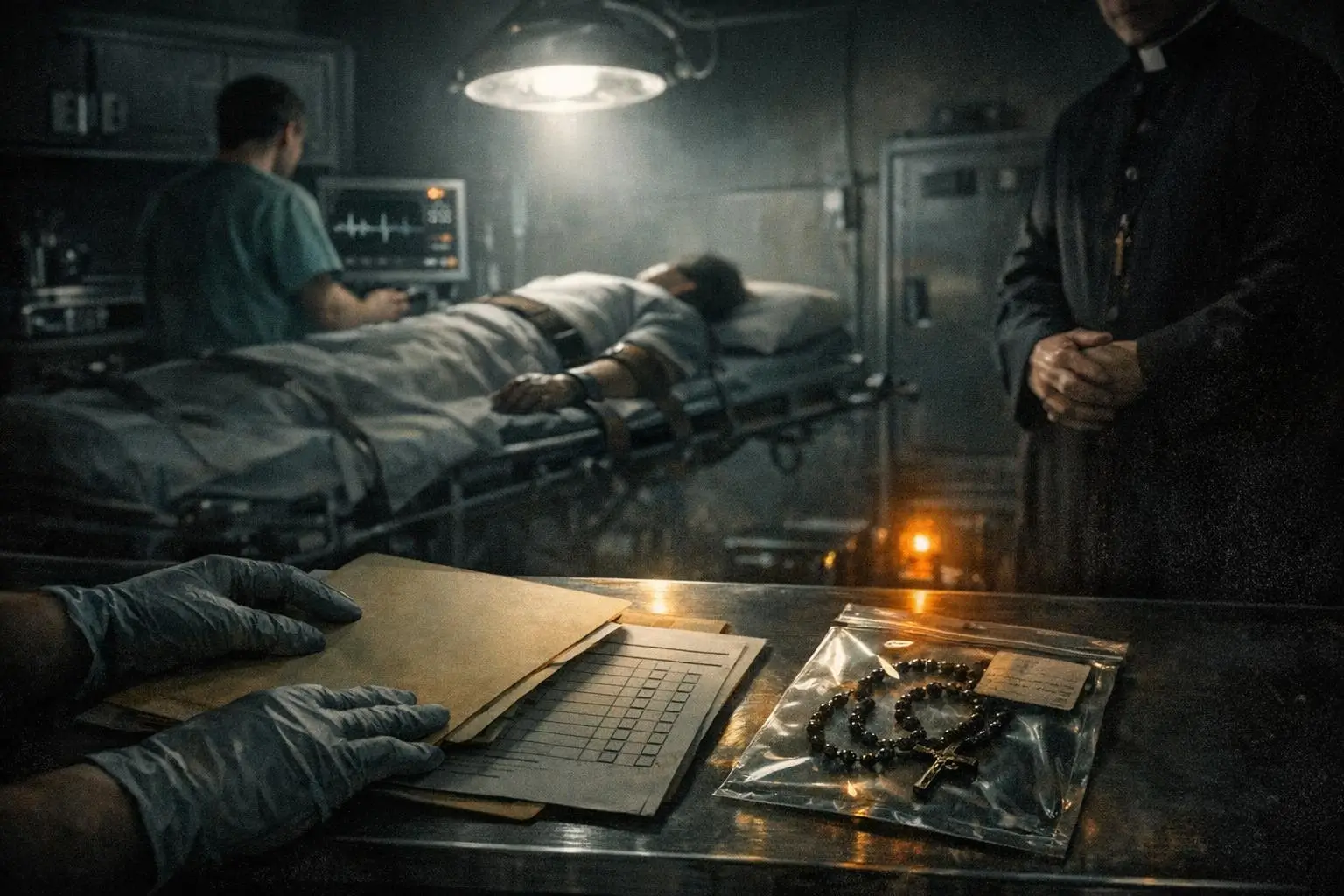
Demonic possession cases scene with a person on a bed, a standing figure, and papers and beads on a metal table.
Ghosts & Demons

Demonic Possession Cases: What the Records Show and Where They Stop
Institutional protocols define reported demonic possession cases as distinct from medical conditions, requiring clinical evaluation before any religious classification applies. The available record restricts these incidents to documented psychiatric or neurological interpretations rather than validating the supernatural narratives often cited in popular culture.
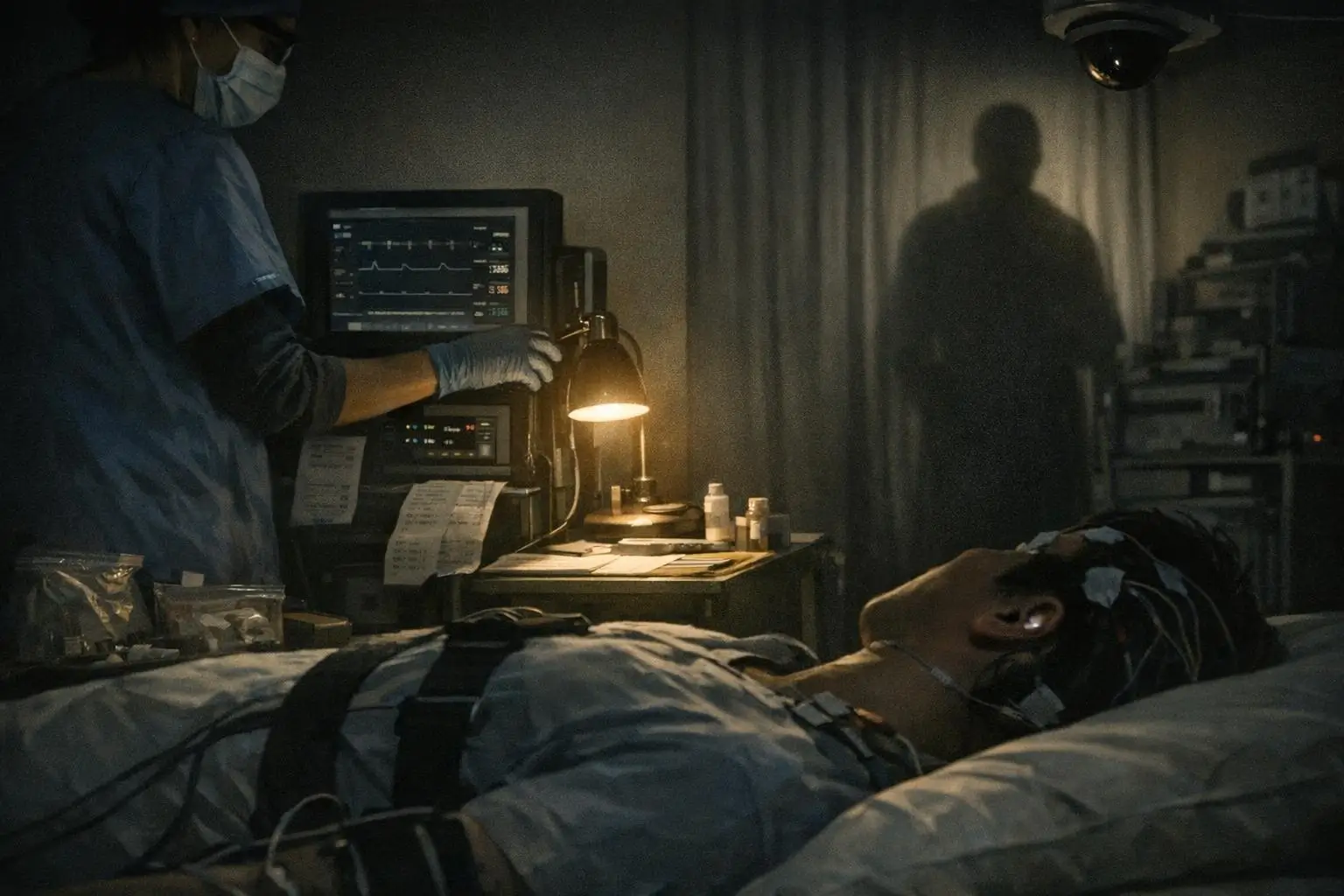
shadow people encounters scene with a person lying on a bed, a masked figure at left, a glowing monitor, and a dark silhouette by curtains
Ghosts & Demons

Shadow People Encounters: What the Medical Record Certifies
Medical documentation defines shadow people encounters as reported perceptions of human-like figures, often occurring during sleep paralysis or prolonged wakefulness. Clinical literature classifies these phenomena as visual hallucinations or REM-related intrusions without certifying the presence of external entities.
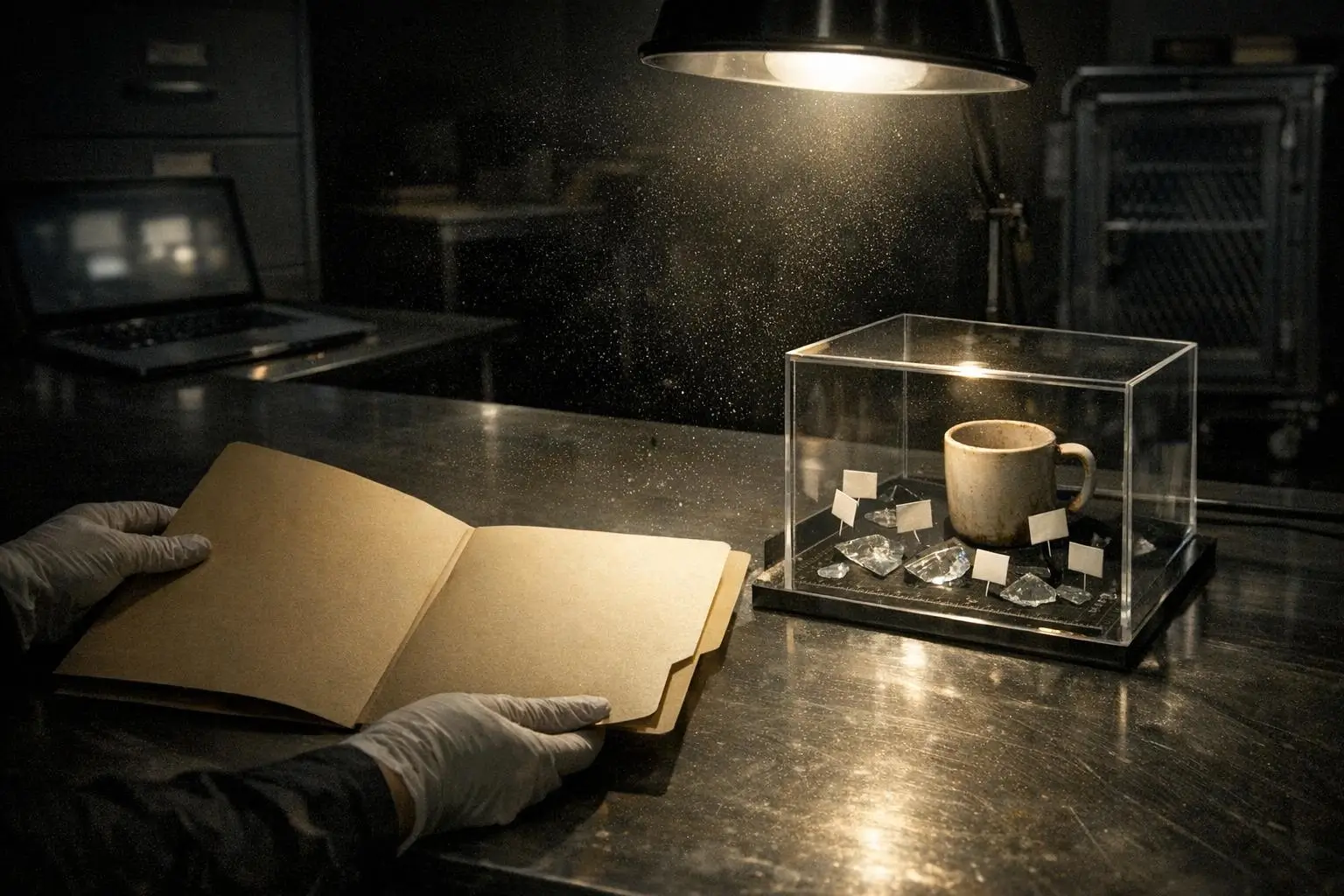
A metal table with gloved hands holding an open folder near a clear box with a stained mug and small tags, poltergeist activity.
Ghosts & Demons

Poltergeist Activity: What the Records Show—and Where They Stop
Documentation defines poltergeist activity through competing framings that propose either living human agency or contagious reactions to ambiguous events. These sources establish the theoretical boundaries of the subject but contain no verified evidence of physical interaction.
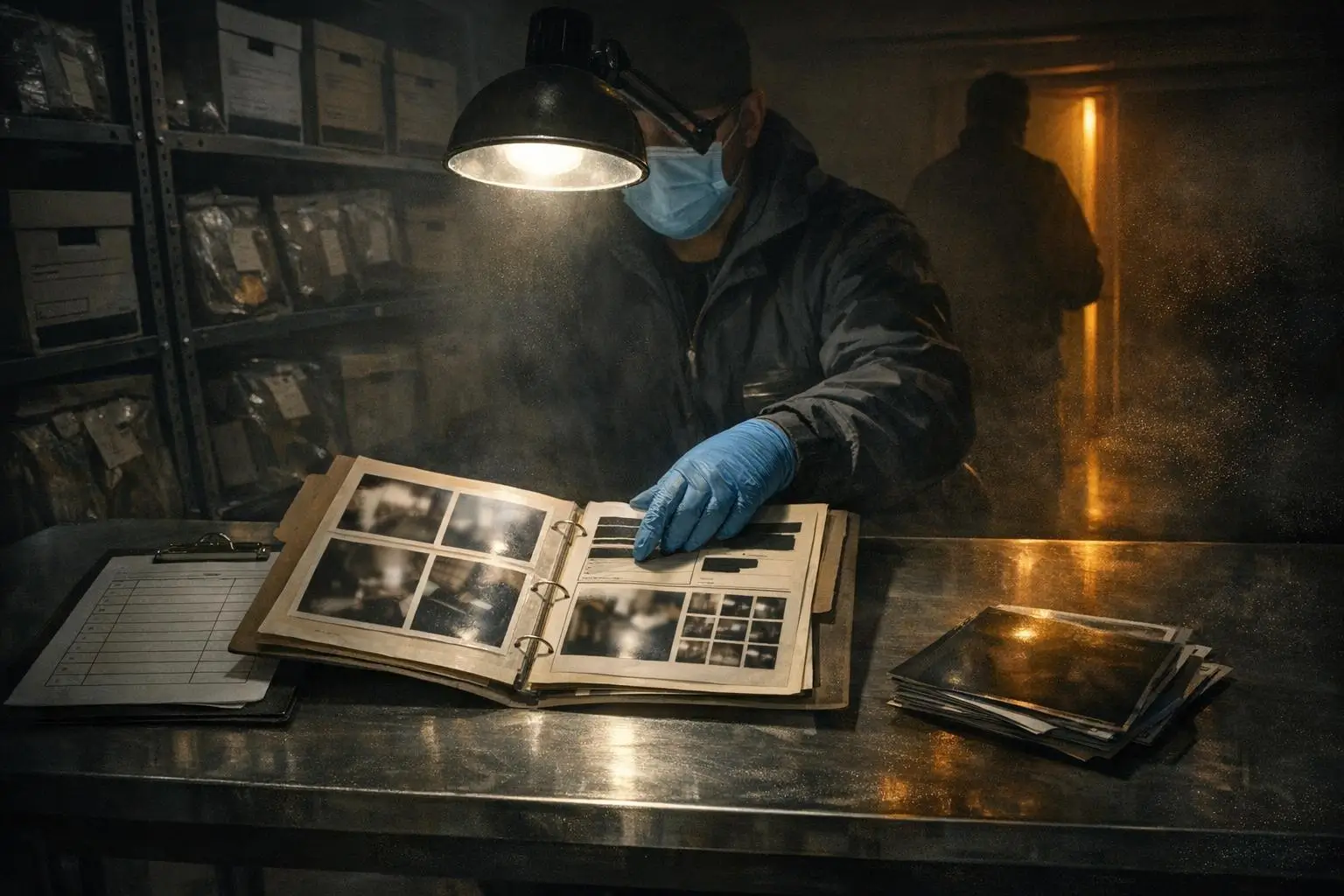
Person wearing a mask and blue gloves turns pages in a binder under a desk lamp, with shelves behind; haunted places
Ghosts & Demons

Haunted Places: What the Records Show—and Where They Stop
Current archives define haunted places as locations characterized by interpretive memory, heritage storytelling, and commercial operator claims. The documentation establishes a clear record of how these sites are packaged for public consumption, but it stops short of providing primary incident logs that verify paranormal activity as fact.
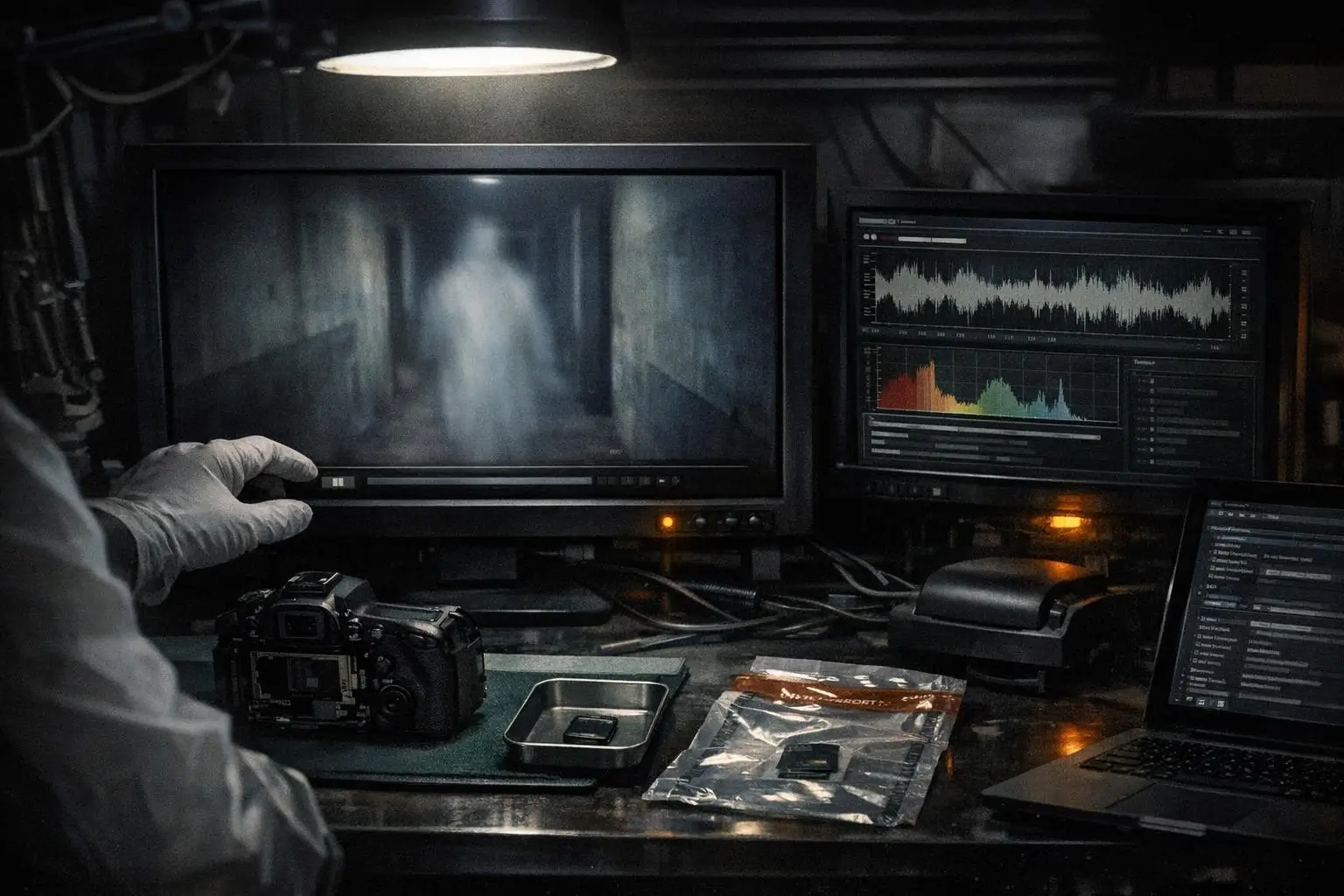
real ghost sightings shown on a monitor, with a gloved hand, a camera body, memory cards, and other screens on a desk.
Ghosts & Demons

Real Ghost Sightings: What the Records Show—and Where They Stop
Institutional files define real ghost sightings as a category of investigation that prioritizes ordinary explanations and controlled testing. The current record supports this methodological framework but lacks the primary chain-of-custody documentation required to validate specific video evidence.
512 theoddsignal2026

A Living Archive

This project is never complete. History is a fluid signal, often distorted by those who record it. We are constantly updating these files as new information is declassified or discovered.