Olmec Civilization Mysteries: The 16 Heads and the Evidence Gap
What can the record still certify about the Olmec colossal heads, and where does it stop short of naming their creators?
The surviving public-facing record in this source set fixes a few hard points about the colossal heads, and then it turns into edges.
- Sixteen known colossal heads
- ~1.47–3.4 m tall; ~6–25.3 tons
- Cerro Cintepec in the Tuxtla Mountains named as basalt source
- Transport method recorded as unknown in an institutional summary
- San Lorenzo described as Olmec by 1150 BCE
These points define the stable edge of certification in the provided record, not a complete account of origins, authorship, or process.
The eHRAF Archaeology NU95 tradition summary that names a basalt source and records transport as unknown
A university-hosted eHRAF Archaeology tradition summary is consulted as a single documentary object, because it states both a source and a limit.
Within that summary, Cerro Cintepec in the Tuxtla Mountains is identified as the basalt source for the monoliths. The statement is presented as a named provenance point inside the summary text.
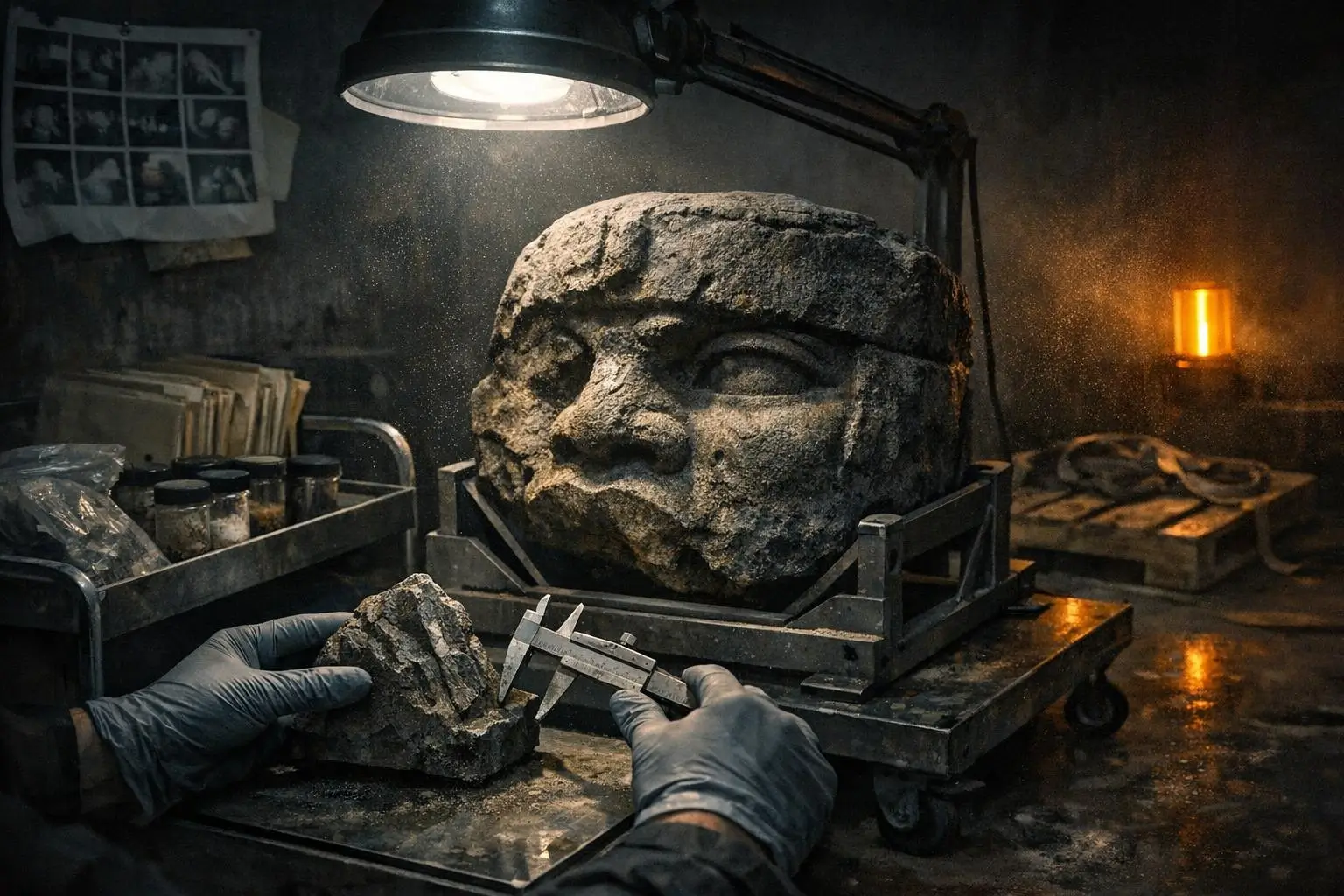
In the same summary, a separate line states that nothing is known about how the monoliths were transported.
The two claims sit side by side as an administrative boundary in the record. One part is specific enough to name a place; the other stops at unknown.
This produces a controlled contradiction inside the archive slice. The material can be pointed to, but the method trail is explicitly cut off. The summary does not supply a workaround or a candidate method.
The only stable reading here is that provenance is named and transport is not documented within this summary entry.[1]
This single page can certify a named basalt source and an explicit transport limit, but it cannot carry the next step: how the stone moved.
The Smarthistory inventory that fixes the corpus size and physical scale
A consolidated inventory reference locks the known count at sixteen Olmec colossal heads.
The same reference reports a wide physical range, with heights given as about 1.47–3.4 m and weights given as roughly 6–25.3 tons.
Within this source set, that numerical frame does not attach each head to a specific discovery context, dating method, or commissioning history. Those primary excavation records are not included here.[2]
The Britannica line that places San Lorenzo as an Olmec center by 1150 BCE
One institutional reference point in this set is a Britannica statement that San Lorenzo is described as having taken on the appearance of an Olmec site by 1150 BCE.
This stabilizes a site-level chronology anchor inside the archive slice, but it does not supply the underlying excavation documentation, stratigraphy, or head-by-head provenience needed to connect specific monuments to specific phases.[3]
The Met description of La Venta that allows one precise monumental detail
A museum institutional essay provides a bounded structural description for La Venta, centered on a single built feature.
In that description, the Great Pyramid at La Venta is described as about thirty meters tall and as dividing the site into northern and southern sectors.
The essay supports precise terminology for layout, but it does not certify who ordered the work, how labor was organized, or what specific meaning was assigned to each monument.[4]
Matthew W. Stirling in a Smithsonian Archives profile, as a traceable research-era hinge
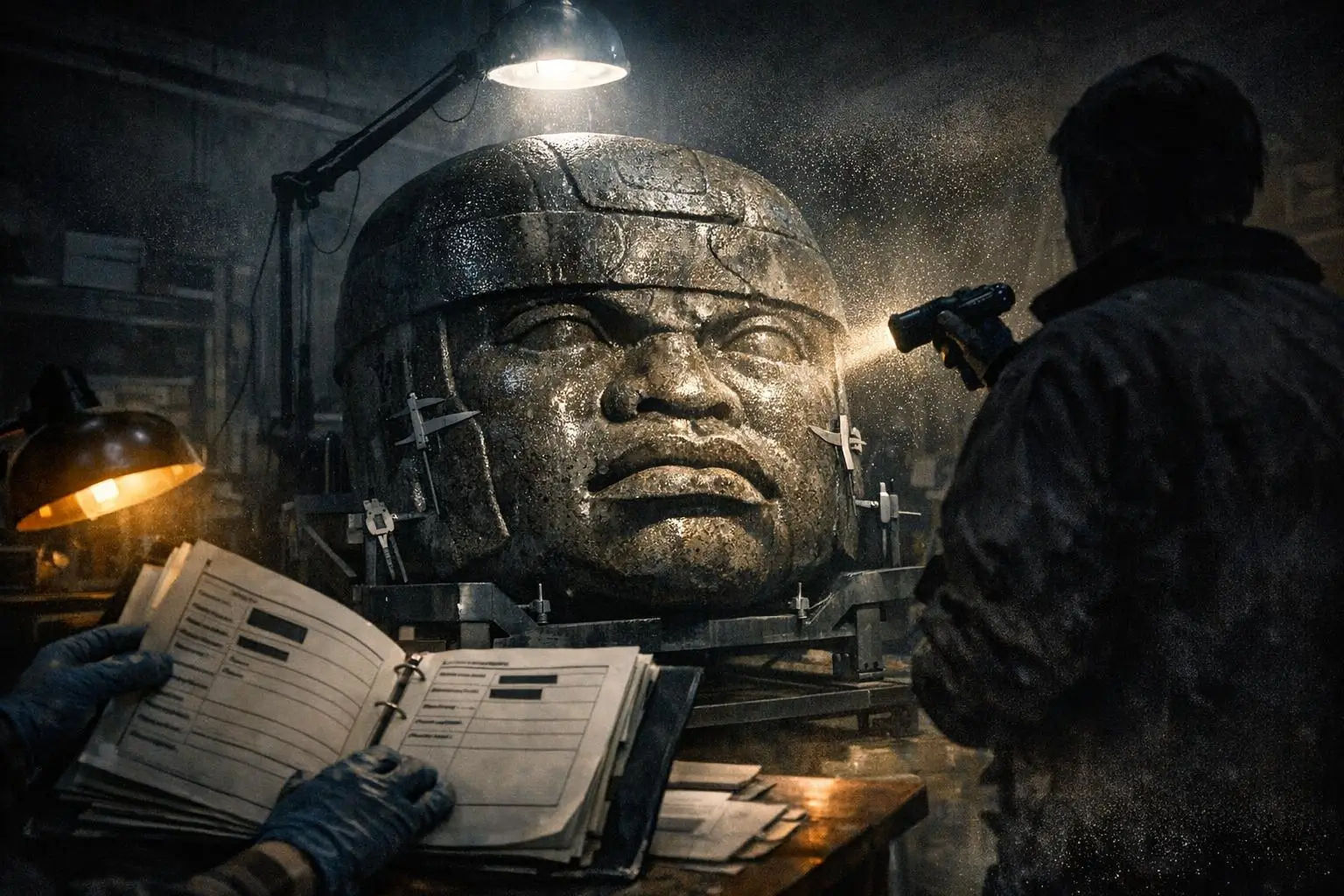
A Smithsonian Archives featured-topic profile names Matthew W. Stirling as an archaeologist who explored the virtually unknown Olmec culture within Smithsonian research activity.
This anchors part of the 20th-century research history to an institutional record and a named investigator, without turning that record into a full account of discovery sequences or field decisions.
The profile can certify his role at the level it states, but it does not supply the primary site reports that would settle monument-specific timelines or excavation contexts.[5]
The PubMed Central ancient DNA review and the boundary it places on origin claims
A peer-reviewed review hosted on PubMed Central states that Mesoamerican ancient DNA research has been unevenly distributed by region.
In the same review summary point used here, the stated focus is mainly on mitochondrial DNA in the Basin of Mexico and the Yucatán Peninsula.
Within this set, that scope statement functions as a hard limit: it does not certify broad population-origin conclusions for a specific ancient culture without direct samples tied to that culture.[6]
What the archive slice lacks: primary excavation reports for heads, sites, and dates
This source set contains high-level institutional anchors, but it does not include Tier-1 excavation reports or Mexican institutional archaeology publications for San Lorenzo, La Venta, or Tres Zapotes.
That absence has a specific consequence: object-level claims about where a given head was found, how it was dated, whether it was moved in antiquity or modern times, and who commissioned it cannot be stabilized here.
The next unresolved question is not symbolic, but documentary: which primary reports and catalog records connect each known head to stratigraphy, context notes, and dating methods.
What this set cannot certify about the African Olmec diffusion claim
Modern public narratives sometimes center an African Olmec diffusion claim, but this archive slice does not contain an acceptable-tier peer-reviewed treatment of that claim or its refutation.
Because those documents are missing here, the record in hand cannot certify either a diffusion argument or a scholarly rebuttal at the level required to close the question.
The next unresolved question is therefore bibliographic: which peer-reviewed articles, university-press books, or museum statements directly address the claim with evidence and documented counter-evidence.
Where the record can certify the heads, and where it permanently stops naming their makers
The record in this set can certify that sixteen colossal heads are known, with reported ranges placing them at about 1.47–3.4 m tall and roughly 6–25.3 tons.
It can also certify a named basalt source in an institutional summary, while that same summary records transport as unknown.
It can add two site anchors: San Lorenzo described as Olmec by 1150 BCE, and La Venta described with a Great Pyramid about thirty meters tall dividing site sectors.
Certification stops where the missing documents begin: primary excavation reports, monument-level provenience and dating method descriptions, and acceptable-tier scholarly treatments that directly address diffusionist claims inside this archive slice.[2][1][3][4][6]
FAQs (Decoded)
For additional entries in the hidden history archive, see the ancient civilizations files, the atlantis site tradition files, or the lemuria continent record file.
Sources Consulted
- eHRAF Archaeology, NU95 tradition summary. ehrafarchaeology.yale.edu, accessed 2025-02-17
- Smarthistory, Olmec colossal heads reference page. smarthistory.org, accessed 2025-02-10
- Britannica, San Lorenzo reference page. britannica.com, accessed 2025-02-03
- The Met, La Venta essay. metmuseum.org, accessed 2025-01-27
- Smithsonian Archives, Matthew Williams Stirling profile. siarchives.si.edu, accessed 2025-01-20
- PubMed Central, review on ancient DNA research in Mesoamerica. pmc.ncbi.nlm.nih.gov, accessed 2025-01-13

A Living Archive
This project is never complete. History is a fluid signal, often distorted by those who record it. We are constantly updating these files as new information is declassified or discovered.