Project Stargate Remote Viewing: What the Record Can Certify
What can the surviving CIA, Army, and DIA-linked record still certify about remote viewing programs, and what can it no longer certify?
This case can be described only where the declassified record stays stable, and only with the labels and roles preserved in specific artifacts.
- 1995 CIA ORD contracted AIR for a program review after CIA and DIA documents were collected and inventoried
- Procedure text defines roles: viewer, monitor, target; viewer described as the percipient who records data
- INSCOM GRILL FLAME report records ACSI agreement on the remote viewing concept and Army involvement
- Label artifacts include CIA page ‘PROJECT SCANATE*’ and a curated DIA sourcebook labeled ‘SUN STREAK’
- PubMed preserves a 1974 Nature bibliographic record by Russell Targ and Harold Puthoff
These points mark the stable edge of what this archive slice can certify, without extending claims beyond the preserved documents.
CIA ORD and the 1995 contractor review preserved in AN EVALUATION OF THE REMOTE VIEWING PROGRAM
The evaluation package reads like an administrative container first, before it reads like a scientific argument.
Inside that container, the CIA Office of Research and Development appears as the office that contracted the American Institutes for Research to conduct a review. The act on the page is commissioning, not conducting.
The same context ties the review to a prior step: relevant CIA and DIA program documents were collected and inventoried before the contractor work is described as proceeding.
That sequencing matters because it is one of the few places where the record states an order of actions. It does not list what was missing from the inventory.
The package format also signals that the review is built from assembled parts rather than from a single narrative, with contractor material placed into a CIA-hosted file.
The document therefore certifies a dated oversight moment anchored in procurement and record-handling language, not in a field report of outcomes.[1]
This gate can certify that a CIA ORD-commissioned contractor review followed an internal document collection and inventory, but it does not stabilize what the collected set fully contained or excluded. This raises a next question about how the program was defined on paper.
The AIR panel report is a contractor artifact, not an internal CIA finding
A separate CIA-hosted document titled AN EVALUATION OF REMOTE VIEWING preserves the contractor panel report portion used within the wider CIA evaluation package.
That distinction limits what can be claimed from it in this slice, because the report is preserved as AIR output rather than as an agency operational directive.
In this archive set, the existence of the panel report is stable, while a full reconstruction of its criteria language is not safe without quoting specific passages directly from the artifact.
The next stable anchor therefore has to come from a document that defines internal program terms rather than from a summary judgment about results.[2]
The training procedure document defines the formal roles used in sessions
A CIA-hosted procedure document titled SUGGESTED REMOTE VIEWING TRAINING PROCEDURE sets out roles as viewer, monitor, and target.
In that text, the viewer is defined as the percipient who accesses and records data.
This can certify that role language existed in writing within the program materials, and that it was formal enough to be specified as a procedure.
It cannot certify, from this slice alone, that every session followed that procedure, or that role definitions matched real-world practice across all program labels.
The next question is which institutions documented their own involvement in remote viewing under program names that appear elsewhere in the file set.[3]
INSCOM Project GRILL FLAME Progress Report #1 records ACSI acceptance language
An Army/INSCOM document titled INSCOM PROJECT GRILL FLAME: PROGRESS REPORT #1 contains language stating that ACSI agreed on the concept of remote viewing and the need for Army involvement.
This is an institutional anchor because it is not a later recollection, but a program-labeled report artifact.
At the same time, the record here does not convert that acceptance language into a certified measure of operational usefulness, outcomes, or intelligence value.
The unresolved step is how this Army-side label sits alongside other labels that appear in CIA-hosted pages without a complete lineage package in the same release slice.[4]
A CIA Reading Room page carries the label ‘PROJECT SCANATE*’
A discrete CIA Reading Room page preserves the label ‘PROJECT SCANATE*’ in the remote viewing lineage-adjacent materials.
That is a narrow certification, but it is also hard to replace, because it ties an early program label to a visible CIA-hosted artifact rather than to secondary naming narratives.
The page itself, as presented here, does not stabilize scope, dates, offices of origin, or how the label relates to later names such as GRILL FLAME or SUN STREAK.
The next question is whether the CIA-hosted set contains an internal overview that can be cited without turning a label into a full lineage claim.[5]
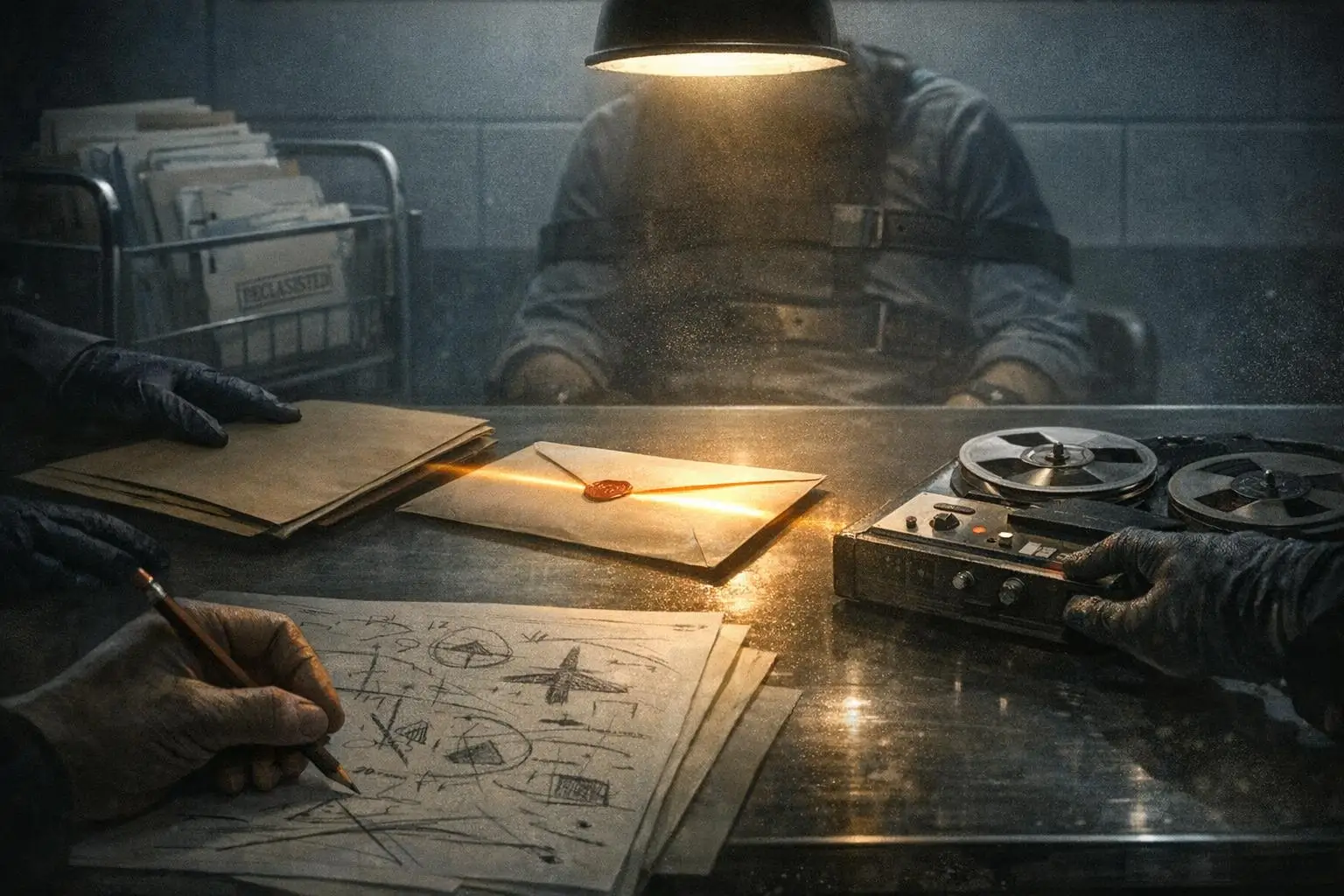
STAR GATE PROJECT: AN OVERVIEW exists as a CIA-hosted briefing document
A CIA Reading Room PDF titled STAR GATE PROJECT: AN OVERVIEW exists as a program-summary artifact in the set.
Its stable value here is bounded: it can confirm that an internal overview document was preserved and released, and keep later discussion anchored to an actual briefing title rather than to later retellings.
This slice does not, by itself, provide a complete chain-of-custody map that stitches SCANATE, GRILL FLAME, and SUN STREAK into a single verified transition sequence.
The next step is to look at what survives on the DIA side in the available curated declassified material, while keeping provenance limits explicit.[6]
A National Security Archive-hosted sourcebook shows the label ‘SUN STREAK’, with provenance gaps left visible
A declassified DIA sourcebook document labeled ‘SUN STREAK’ is available in the National Security Archive collection.
This can certify that SUN STREAK appears as a named program or document label within the remote viewing effort, at least at the level of the preserved sourcebook artifact.
What does not stabilize in this slice is the originating office, release package context, distribution list, or an originating-date chain that would normally support tighter provenance claims.
The next question is how the evaluation-era material treated the research record, especially where reviewers documented disagreement instead of a unified posture.[7]
Evaluation-era materials preserve a recorded dispute over interpretation of the research record
Within the evaluation-era set, the record preserves a structured disagreement about how to interpret the psychic phenomena records.
In this slice, that dispute is carried through curated materials that include a response by Jessica Utts and a critique by Ray Hyman.
The stable point is the divergence itself, including the documented tension between statistical framing and practical or interpretive conclusions.
The boundary is immediate: the archive slice does not certify a single settled verdict across reviewers, and it does not authorize the narrator to pick a dominant reading beyond what the documents state.
The next question is what earlier public research nodes can be named without importing method claims not present in the available files.[8]
The PubMed record fixes a 1974 Nature publication by Russell Targ and Harold Puthoff, but nothing more
A PubMed bibliographic record documents a 1974 Nature publication by Russell Targ and Harold Puthoff titled Information transmission under conditions of sensory shielding.
That record certifies publication metadata and author attribution, making it a stable public node adjacent to the government document set.
But this archive slice does not include the full text of the article, and it does not include associated government contract or tasking documentation tied to that publication.
So the record can name the bibliographic existence of an early publication, while it cannot safely carry specific experimental claims, methods, or limitations into the STARGATE program story from this slice alone.[9]
Where the Project STARGATE remote viewing record stays solid, and where it breaks
The record can still certify that, by the time of a CIA ORD-commissioned contractor review, CIA and DIA program documents had been collected and inventoried for evaluation purposes.
It can also certify that at least one procedure text defined roles as viewer, monitor, and target, and that an Army/INSCOM report used language of ACSI agreement on the concept and Army involvement.
It can further certify that multiple labels are preserved in artifacts, including a CIA page bearing ‘PROJECT SCANATE*’ and a curated DIA sourcebook labeled ‘SUN STREAK’, without those labels forming a complete verified transition chain here.
Certification stops where provenance packages, operational files, and full-text research documents are absent from this slice, and where the evaluation-era materials themselves preserve disagreement rather than a single interpretive posture.[1]
FAQs (Decoded)
Does this archive slice prove that remote viewing produced usable intelligence?
No. In this slice, the most stable evaluative anchor is the existence of a CIA ORD-commissioned contractor review and the recorded dispute over interpretation, not a certified operational effectiveness claim. Source: CIA Reading Room, AN EVALUATION OF THE REMOTE VIEWING PROGRAM.
What roles does the procedure document define for remote viewing sessions?
It defines roles as viewer, monitor, and target, and describes the viewer as the percipient who accesses and records data. Source: CIA Reading Room, SUGGESTED REMOTE VIEWING TRAINING PROCEDURE.
What does the GRILL FLAME progress report certify about Army involvement?
It certifies that the report contains explicit language that ACSI agreed on the remote viewing concept and the need for Army involvement. Source: CIA Reading Room, INSCOM PROJECT GRILL FLAME: PROGRESS REPORT #1.
What does the ‘PROJECT SCANATE*’ page actually add?
It adds a minimal but firm label anchor inside a CIA-hosted artifact, without stabilizing scope, dates, or how the label connects to later names in this slice. Source: CIA Reading Room, FOIA page bearing ‘PROJECT SCANATE*’.
Why does the SUN STREAK document not settle provenance in this article?
Because this slice supports SUN STREAK through curated hosting of a declassified sourcebook, while the original release context and chain-of-custody details are not established here. Source: National Security Archive, DIA declassified sourcebook labeled ‘SUN STREAK’.
What can be safely said about the 1974 Nature article in this slice?
Only that PubMed preserves the bibliographic record for a 1974 Nature publication by Russell Targ and Harold Puthoff with the listed title, without importing full-text claims. Source: PubMed, bibliographic record for Information transmission under conditions of sensory shielding.
Explore the paranormal case archives for more declassified documentation, or continue to remote viewing program files for related materials.
Sources Consulted
- CIA Reading Room, AN EVALUATION OF THE REMOTE VIEWING PROGRAM. cia.gov, accessed 2025-02-17
- CIA Reading Room, AN EVALUATION OF REMOTE VIEWING. cia.gov, accessed 2025-02-10
- CIA Reading Room, SUGGESTED REMOTE VIEWING TRAINING PROCEDURE. cia.gov, accessed 2025-02-03
- CIA Reading Room, INSCOM PROJECT GRILL FLAME: PROGRESS REPORT #1. cia.gov, accessed 2025-01-27
- CIA Reading Room, FOIA page bearing ‘PROJECT SCANATE*’. cia.gov, accessed 2025-01-20
- CIA Reading Room, STAR GATE PROJECT: AN OVERVIEW. cia.gov, accessed 2025-01-13
- National Security Archive, DIA declassified sourcebook labeled ‘SUN STREAK’. nsarchive2.gwu.edu, accessed 2025-01-06
- National Security Archive, curated declassified evaluation dispute materials. nsarchive2.gwu.edu, accessed 2024-12-30
- PubMed, bibliographic record for Information transmission under conditions of sensory shielding. pubmed.ncbi.nlm.nih.gov, accessed 2024-12-23
A Living Archive
This project is never complete. History is a fluid signal, often distorted by those who record it. We are constantly updating these files as new information is declassified or discovered.